Showing posts with label Adoption. Show all posts

Saturday, May 16, 2009

Madonna, Africa and Child Mortality

Huffington Post

The problem is straightforward: more than nine million children die each year in Africa. That is the number of people in the entire state of New Jersey.

African kids die from infectious diseases such as HIV, TB, malaria, respiratory illnesses, diarrhea, worms, parasites, and vaccine-preventable diseases, malnutrition and -- far too often -- during childbirth itself.

In an exclusive interview with HuffPo, Sonia Ehrlich Sachs, M.D., M.P.H. spoke to me about Africa, child mortality, and an intelligent, charismatic women who has learned much about both: Madonna.

2009-05-15-Malawi1.jpg
Millennium Villages help care for children in Africa.

Dr. Sonia Sachs is a public health specialist and serves as the health coordinator for the Millennium Villages Project at the Earth Institute at Columbia University.

Dr. Sonia Sachs is a public health specialist and serves as the health coordinator for the Millennium Villages Project at the Earth Institute at Columbia University.

She is also married to another brilliant thought leader and global citizen, Prof. Jeffry Sachs, Director of the Earth Institute, and Special Advisor to the U.N. Secretary General on the Millennium Development Goals.

Sonia is the pediatrician who was with Madonna in Malawi when the singer met one-year old David Banda. Sonia explained to me that the evening David left the orphanage to spend his first night with Madonna in a hotel in Lilongwe, he was very ill and could have died, as did his other siblings before him. She credits the entertainer for saving the child's life.

I had not realized that Madonna's project, Raising Malawi, was helping to support one of Jeff's Millennium Villages near Lilongwe. That was one of the reasons Sonia was with Madonna on the trip.
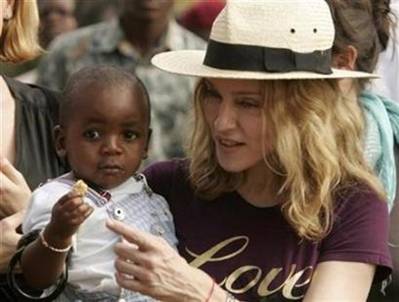

2009-05-15-Malawi2.jpg
David Banda with his adoptive mother, Madonna.

"David would have died that evening or the following day if it were it not for Madonna. I can tell you with certainty that he would have died had he stayed in the orphanage," Sonia told me.

"The evening David was handed over to Madonna, he had a very high fever and was in acute respiratory distress -- meaning he had difficulty breathing."

"We took him to a private clinic, where a colleague and I examined him carefully, took a chest X-ray, diagnosed his respiratory infection, and treated him immediately with an inhaler, and intramuscular antibiotics. Lower respiratory infections like pneumonia are a common killer of so many children in Africa every year."

As founder of Orphans International Worldwide, I have experienced the death of one of our children in Haiti. The pain of losing a child is indescribable.

Last fall, Sonia presented to our Orphans International Worldwide Congress -- held at N.Y.U. Medical School -- on the grim story of African child mortality. She explained about preventable and treatable conditions such as extreme nutrient deficiencies, infectious diseases and unsafe childbirth.

The deaths of African children are all about food, water, and cooking stoves. Sonia explained that there is usually no public health system in place to address this tragic litany of otherwise very approachable issues.

Simple, non-clinical health interventions make a big difference in saving lives, Sonia believes. Improved nutrition through school meals, better cooking stoves to reduce open fire and indoor air pollution, clean water, mosquito bed nets, and de-worming are all essential, interventions needed but not affordable by people living in extreme poverty.

Through her work, Sonia has come to know Madonna a little bit. "I have found Madonna to be an impressively solid person dedicated to her children and to the welfare of thousands of neglected orphans in Malawi."

2009-05-15-Malawi3.jpg

A Millennium Village doctor examining a child.

Sonia has personally witnessed Madonna's compassion and motherly instincts more than once.

In Malawi some people practice witchcraft. On occasion, a boy's entire genitalia are removed by villagers based on ancient superstition. One little boy Madonna met had been so mutilated he could not stop wetting himself. The physical and emotional suffering was unbearable.

Madonna held the boy and pledged to care for him, which she has done to this day by looking after his medical and educational needs. Thanks to Madonna, the boy continues to improve.

2009-05-15-Malawi4.jpg

Children learning in a Millennium Village in Africa.

Madonna somehow speaks to the children of the world. From Africa to Asia and the Americas. My own teenage son Mathew -- adopted at the age of ten months from Indonesia -- has informed me that if I ever meet Madonna without him, he will disown me.

Monday, May 4, 2009

Family in Madonna Adoption Case 'Laugh Off' Dad's Plea

People Magazine

As the hearing on Madonna's adoption appeal gets under way in Malawi, the family of the girl at the center of the controversy – 4-year-old Mercy Chifundo James – rejected efforts by the child's apparent biological father to claim her.

"He said he wanted to make peace with us. He said he wanted to be allowed to take care of his child, but we laughed him off. Where was he all this time?" said one of Mercy's uncles, Peter Baneti.

The father, James Kambewa, visited the girl's clan Saturday in the mud-and-thatch village outpost of Zaone, in the eastern district of Zomba. He was accompanied by his aunt, a man and another woman, the uncle said.

Baneti had signed the adoption papers that would have allowed Madonna to call Mercy her daughter, but the southern African country's High Court rejected the pop singer's efforts. On Monday, Madonna's appeal was adjourned until 1 p.m. local time because John Gulumba, a lawyer appointed by Eye of the Child – a child-rights organization that is against the adoption – filed his court papers late.

'Has No Case'

On Saturday, Kambewa brought his concerns to the family's village, but, according to Baneti, a local chief said "James has no case since if he wanted to have anything to do with the child he should have been there even after his girlfriend died."

In an interview airing Monday on CBS's The Early Show, Kambewa said he is "capable of taking care of my baby" and that Mercy needs "to grow as a Malawian ... with our culture."

Mercy, whose teenage mother died after her birth, is living at Kondanani Children's Village in the town of Bvumbwe. Madonna first met her in October 2006, the same time she found son David Banda at a different orphanage.

Kambewa , who has said he's ready to undergo a paternity test, is scheduled to meet a lawyer from the Malawi Law Society on Monday, said Mercy Mulele, the law group's secretary general. Eye of the Child, a child-rights non-governmental organization, also wants to weigh in.

But Baneti holds strong in his belief that Kambewa has no place in Mercy's life. He told PEOPLE: "This boy is a joker and we told his delegation never to waste our time again."

Madonna adoption case heard amid paternity dispute

AP via Yahoo!

BLANTYRE, Malawi – Malawi's highest court began deliberating on Madonna's bid to adopt a 3-year-old girl from the southern African country, as a dispute erupted over whether a man trying to stop the proceedings is the girl's father.

Madonna was not at Monday's closed-door hearing at the Malawi Supreme Court of Appeal, and a ruling may not be announced for several days.

The 50-year-old pop star is fighting a lower court's decision that she cannot adopt Chifundo "Mercy" James because she had not been screened over time by Malawi authorities. The court said the rules were bent when Madonna adopted her son David from Malawi last year.

Madonna's Malawian lawyer Alan Chinula said he was "hopeful" the appeal would succeed, and argued the lower court had relied on outdated law to block the girl's adoption.

Madonna found the girl in 2006 at Kondanani Children's Village, an orphanage in the southern town of Bvumbwe just south of the commercial capital of Blantyre. It was the same year she adopted David, whom she found at another orphanage in the central Mchinji district.

On Sunday, a man told The Associated Press he was the girl's father, and has sought help from the Malawi Law Society to stop the adoption.

James Kambewa, a 24-year-old a security guard, acknowledged he has never seen the child, who according to court documents was placed in the orphanage when her 14-year-old mother died a few weeks after giving birth to her.

But Kambewa said he now wanted to claim custody of Chifundo.

"I may be poor, but I think I have what it takes to raise a daughter," he said. "I will fight the adoption."

The brother of the girl's mother told the AP the family does not know Kambewa.

"How can he claim he is the father when he hasn't been around all this time?" said Peter Baneti, who explained that the girl was put in the orphanage because there was no one to breast-feed the baby.

Baneti said he had agreed to the adoption on behalf of the family, and that Kambewa was "just an opportunist."

Madonna spokeswoman Liz Rosenberg said in an e-mail message she doesn't know if Kambewa is the father.

"All I know is that Mercy has been in an orphanage since the day she was born," Rosenberg said.

Kambewa, in an interview to be aired Monday on CBS' "The Early Show," said he has only seen the girl "in newspapers and TV — not face to face." But he told CBS the girl "is a Malawian — so (I) need her to grow as a Malawian as well with our culture."

On the show, Kambewa wore a necklace bearing the girl's name.

Madonna has founded a charity, Raising Malawi, that helps feed, educate and provide medical care for some of Malawi's more than 1 million orphans, half of whom have lost parents to AIDS.

Thursday, April 30, 2009

Hugh Jackman: You don’t adopt for publicity; Madonna’s coming from a good place

The Sun

HUGH JACKMAN has sent a message of support to Madonna after her failed bid to adopt a Malawian orphan.

The Aussie movie star and his wife, DEBORRA-LEE, have two kids who they adopted as babies from America — Oscar, eight, and three-year-old Ava.

But, like MADONNA, their hopes of giving a home to a Third World child were crushed by rules that made it virtually impossible to adopt from Africa or Asia.

Speaking exclusively to The Sun, Hugh — who hit cinema screens this week as razor-clawed X-Men character Wolverine — said: “The adoption laws in Australia are too restrictive. Of course, checks need to be made. But they had a very negative approach.

“It was like they were trying to discourage you. There are 130million orphans in the world — who is looking after them? If you are a citizen of the world, on some level they are all our responsibility.

“And if you have got parents who want to adopt and there are children who need a home, it seems like a no-brainer.

“There are not that many children in Australia who need adopting, so we looked internationally and that is what is difficult.”

The couple turned to adoption after actress Deborra-Lee, 48, suffered repeat miscarriages.

But they insist they would have done it regardless.

Hugh, 40, said: “We tried and it just didn’t happen for us. There was no particular medical reason.

“We had a few miscarriages, which was very upsetting. But we always planned on adopting anyway, even if we had our own biological children.”

The actor can well understand Madonna’s desire to add to her brood — Lourdes, 12, Rocco, eight, and three-year-old David Banda, who she adopted from Malawi in 2006.

And he is sickened by cynics who applauded an African judge’s decision to reject her bid to become mum to baby girl Mercy James earlier this month.

Hugh said: “I challenge anyone who thinks you adopt a kid for a publicity stunt. Anyone parent knows that would have to be the most intensive publicity stunt in the world. I am sure she is coming from a good place.”

However, unlike the pop queen, Hugh has no plans to expand his family.

Laughing, he continued: “We think about another adoption. Then every time we get on a plane with our two kids and are all crammed in together, we think maybe we will leave it at what we have.

“Our first child was not the easiest of babies, which is why we left it five years before the second. Our second was a dream baby.”

Wednesday, April 29, 2009

Malawi's Chief Justice Takes Over Madonna Adoption Appeal

People Magazine

The head of the judiciary in Malawi will lead a three-judge panel in an appeal case in which Madonna wants to overturn the southern African country's High Court decision to reject her application to adopt a 3-year-old girl.

The hearing before Chief Justice Lovemore Munlo and two other judges is set for May 4. "Since this involves an infant it will be heard in chambers," said High Court and Supreme Court of Appeal spokesman Joseph Chigona. "This is an important case; that's why the chief justice himself has taken special interest."

Madonna, 50, is not required to attend the hearing although she may if she wishes.

Attorney Objects to Ruling

The appeal follows High Court Judge Esme Chombo's dismissal of the singer's application to adopt Mercy Chifundo James on the premise the entertainer does not have a permanent residence in Malawi. Madonna, who last year successfully completed her adoption of another Malawian toddler, David Banda, also 3, has visited Malawi three times.

Madonna's Malawian lawyer Alan Chinula appealed Chombo's ruling, calling it "erroneous." Chinula contended the judge relied on an "archaic law" of more than 50 years ago. "We are hopeful the Supreme Court of Appeal will overturn Justice Chombo's ruling," he said.

Madonna found Mercy at Kondanani Children's Village in the town of Bvumbwe when she first visited Malawi in October 2006, the same time she found David Banda at a different orphanage. Mercy was placed at Children's Village following the death of her teenage mother.

Monday, April 20, 2009

Madonna Adoption Appeal Set for May 4

Usmagazine

Madonna's appeal in her attempt to adopt a 3-year-old girl from Malawi will begin May 4.

The case will be heard by three Supreme Court of Appeal judges, Court official Joseph Chigona, tells Usmagazine.com.

"It may take up to two weeks," Chigona tells Us. "Madonna is not required to be present [during the appeal]."

"As with all court cases involving infants, this one will be in
chambers, not in an open court," he says.

Alan Chinula, Madonna's Malawian lawyer, tells Us they are "confident" things will work in their favor with the appeal. (A judge rejected the singer's application to adopt Chifundo "Mercy" James earlier this month because she did not meet residency requirements.)

Says Chinula, "We believe the lower court judge errored by basing her judgment on an archaic law of over 50 years ago."

Wednesday, April 15, 2009

Flo Rida backs Madonna's adoption bid

The Mirror

Rapper Flo Rida is calling on the African authorities to show a little mercy to his friend Madonna.

The 29-year-old chart-topper has rushed to support Madge after she failed to adopt her second Malawian tot, Mercy, this month.

The pair became buddies after Flo Rida - who had a huge hit with Right Round - worked on her last album, Hard Candy, with Timbaland and Justin Timberlake.

Chatting to us backstage after his fab concert at London's Indigo 02 Arena, he said: "Madonna is the one and only Material Girl and she should be blessed with this child because this is what she really wants.

"I'm going to shout out to the African authorities and appeal to them to give her a baby. She should be patient. It will happen. I'm rooting for her.

"She's my girl."

Tuesday, April 14, 2009

Madonna and Child

Ethicist.Blogs.NY Times

Randy Responds| 5:32 p.m.

Several readers assert that rather than undertake foreign adoption with its attendant problems, ethical and otherwise, Madonna and others should adopt locally. Sadly, as many people who have attempted this can confirm — and as some readers note — it’s not easy, and sometimes it’s all but impossible. I know a couple of families who turned to foreign adoptions only after being thwarted in their other efforts to have children, including through adoption here in the U.S.

Which raised this question for some readers: isn’t there a greater moral obligation to help those close by? It was once commonly thought so. Samuel Johnson, the great 18th-century moralist, said as much to James Boswell, as recorded in the latter’s “Journal of a Tour to the Hebrides”: “A man should first relieve those who are nearly connected with him, by whatever tie; and then, if he has anything to spare, may extend his bounty to a wider circle.”

Particular relationships do entail particular obligations. Parents have duties to their children that they do not have to strangers. But national borders do not define such relationships: they are not moral borders. And “nearly connected” has a different meaning today than it did in the 18th century. Our ease of travel (if “ease” can be said to apply to anything involving an airport) as well as the flow of images and ideas, both foster and make increasingly apparent the connectedness of humanity. The philosopher Peter Singer is a notable proponent of the worldwide reach of our moral obligations, a subject he takes up in his book “One World: The Ethics of Globalization.”

Another concern readers have: Madonna’s motives. Is she publicity crazed? Is it all egomania? Johnson had something to say about Madonna, too, if not by name. (He was prescient but not that prescient.) “To act from pure benevolence is not possible for finite beings. Human benevolence is mingled with vanity, interest or some other motive.” I believe Freud reached a similar conclusion about our tangled motives, albeit from a different angle. Or to put it another way, failing to achieve sainthood ought not disqualify anyone from parenthood.


Last Friday, a court in Malawi rejected Madonna’s application to adopt a 3-year-old girl named Chifundo ”Mercy” James. Judge Esmie Chondo affirmed that adoptive parents must reside in the country for at least 18 months, a provision meant to thwart child-trafficking (and one that was waived when Madonna adopted a Malawian boy last year). Clearly celebrities should not use their status to skirt adoption regulations. But some children’s advocates oppose not only this adoption, but international adoption in general. Is it ethical for families from wealthy nations to adopt children from poorer countries?

There is a creepy evocation of colonialism when a rich American or European swoops into a poor African nation and grabs a child, as if the country were a baby plantation. Critics charge that the adoptive parents benefit from the persistence of poverty. They do, but in much the same way as Lenny Bruce described the modus operandi of Jonas Salk, J. Edgar Hoover and himself: “These men thrive upon the continuance of disease, segregation and violence.” That is, they respond to but do not promote human misery. (O.K., except for Hoover.)

What’s more, poverty is not the sole reason children are abandoned. It was China’s one-child policy that made so many girls available for adoption. Genocide orphaned thousands of Rwandan children. AIDS still reduces children to wretchedness in many parts of Africa. Adoptive parents do not seek to protract anyone’s torment but to build a family and help a child, actions we esteem.

But as far as helping children, adoptive parents might do so more effectively simply by donating money (as Madonna has also done in Malawi). A fraction of the typical $20,000 spent on an adoption or the $250,000 it takes to raise a middle-class American child could assist a great many African kids. But the ethical obligation to help suffering children does not apply only to those who wish to adopt; it is a general duty we all share.

We are morally required to aid a child who lies bleeding on our doorstep. Or a child across the street. Or across town. Or across the Atlantic Ocean. Rather than merely urge adopting families to redirect their expenditures, we should reallocate the money we ourselves spend on a ski weekend in Aspen, a flat-screen TV for the dog’s room, a $3 billion stealth destroyer for our Navy ($4 billion if equipped with optional — and fictional — leather upholstery).

Some groups, notably Save the Children, based in London, assert that the prospect of a foreign adoption encourages desperate parents to abandon their children in the hope of securing a better life for them. This claim is unconvincing. Families are demolished not by the possibility of adoption but the reality of poverty or disease or war, according to Dr. Jane Aronson, a pediatrician specializing in adoption medicine. It is vital to address these harrowing conditions, but that does not preclude adoption, she says; “To help one child is a worthy thing to do.”

Save the Children is more convincing when it argues that children should be raised by their families in their own cultures. This is a laudable goal, but to achieve it, Aronson says, much needs to be done to “help rebuild communities around the world so families can receive proper social services and needn’t give up their children.”

Indeed, Judge Chondo’s decision does not mean that Mercy James will be raised by a relative. She has been placed in an orphanage — albeit, one of Malawi’s best, the judge says (some consolation, I suppose, if you like your ironies grim).

As long as there are orphans, the ethical question is not whether it is O.K. to adopt but how to do it. Jacqueline Novogratz, the head of the Acumen Fund, a non-profit that promotes anti-poverty efforts throughout the world, says: “Reputable adoption agencies know where children come from. Some children are abandoned and some are placed in orphanages when their families can’t afford to raise them. Finding those children good, stable, healthy homes could change their lives immeasurably. Going through the right agencies is key.”

Sadly, such scrupulousness, while necessary, may not matter much in the end. If Malawi (or Russia or Ethiopia or Guatemala) threw open its doors to everyone on earth who wished to adopt — no rules, no red tape, no embarrassing Madonna-indulgences — it would barely diminish the heart-rending parade of homeless or orphaned children stretching to the horizon. Most estimates put their number above 100 million worldwide. And who will adopt those who are not adorable infants — a traumatized 11-year-old Pakistani street kid or a 5-year-old Nigerian with AIDS or, for that matter, a teenager shunted around New York’s foster care system?

One other consideration: would endorsing foreign adoption compel us to stop teasing Madonna? Happily, no. While she seems to have acted creditably here, as long as she dons a T-shirt emblazoned with the unconvincing slogan “Kabbalists Do it Better,” let the mockery be unconfined. She’s rich, she’s glamorous — a self-made success, still a pop star at 50. Of course we make fun of her; we need to.

In considering international adoption from an ethical perspective, I hope I’ve suggested fresh ways of seeing it. One of the small frustrations of writing “The Ethicist” in the weekly magazine is that I’m limited to the questions that people submit to me, with a general focus on personal ethics. (Sadly, I have yet to receive a query from a member of Congress, a Pentagon official, a senior executive of a Fortune 500 company.) But in this forum, I get to select the topic, a chance to consider public events. So that’s what I’ll do each week in Moral of the Story. Reader comments are encouraged, and I will regularly respond.

Sunday, April 12, 2009

Madonna Makes Adoption Plea to Malawi Newspaper

Us Magazine

Madonna opens up about her failed attempt to adopt 3-year-old Mercy James in a new interview.

"I want to provide Mercy with a home, a loving family environment and the best education and healthcare possible," she e-mailed Malawi's Nation newspaper in response to its questions. "And it's my hope that she, like David, will one day return to Malawi and help the people of their country."

Madonna, 50, continued: "Though I have been advised that I cannot publicly discuss the pending appeal regarding my desire to adopt Mercy, I do want to say how much I appreciate the level of support that I have received from the people of Malawi and my friends around the world."

Judge Esimie Chombo turned down the singer's adoption application because she didn't meet the country's 18 to 24 month residency requirement.

Her lawyer Alan Chinula confirmed to Us earlier this month she filed an appeal.

Saturday, April 11, 2009

Mel B praises Madonna

New 24

Los Angeles - Mel B has praised Madonna's adoption bid.

The former Spice Girls star admires the 4 Minutes singer's failed attempt to open her home to four-year-old Malawian girl Mercy James.

She said: "It's easy for critics to knock celebrities who choose to adopt, but it's a good thing that Madonna's doing. Not only is she highlighting the plight of orphans in Africa, she's also giving this little girl the chance of a better life."

Madonna - who has 12-year-old daughter Lourdes, eight-year-old son Rocco and David, three, who was also adopted from Malawi - has been forced to return to Britain without Mercy after an African court rejected her bid to adopt last week because she had not lived in Malawi for the legally-required 18 months.

The 50-year-old singer has now left the country while lawyers prepare their bid to appeal the decision on her behalf.

Mother-of-two Mel - who has two daughters Phoenix Chi, 10 and Angel Iris, two - also revealed she would have considered adoption if she hadn't been able to have biological kids.

She said: "Personally, because I can have children naturally, adoption isn't something I would consider. But if it was a struggle to have a child naturally then I'd be all for adopting. What struck a chord with me is that Madonna plans to keep the child in touch with her roots in Africa. I don't think it matters where a child comes from - it's about giving a baby or a child a family, love and a fresh start."

Wednesday, April 8, 2009

Liz Smith on the adoption

wowowow

Is everybody happy? The Malawi government refused to grant Madonna permission to adopt three-year-old Mercy James (whom she first met two years ago). The child will stay in an orphanage. That’s better than Madonna?!

2009_0331_Getty_Madonna_Malawi2_0.jpg
Madonna and David Banda © Getty Images

Even Guy Ritchie, though happy to be single again, released a statement praising Madonna’s parenting, and expressed distress and surprise at the actions of the Malawi court.

Odd, isn’t it, that the child’s grandmother — the only living relative — allowed Mercy to languish in the orphanage, without a peep, until Madonna showed up ready to adopt? Then granny gets all excited, and we are treated to the idea that the evil pop star has come to pluck the child, shrieking, from her grandmother’s loving arms.

In Malawi, 14 percent of the population is HIV positive, and life expectancy is 44 years. And what awaits many African girls — aside from contracting AIDS? Rape, teenage pregnancy and death caused by childbirth. (Mercy’s 18-year-old mother died soon after giving birth.)

Whatever happens to little Mercy, we can all sleep safe and snug, knowing she is not being raised in comfort and safety, with the best medical care and education available, by that monster of iniquity, Madonna.

Even if we never contribute a dime or a second of time to a needy cause, we’re all better than Madonna, right?

Tuesday, April 7, 2009

Madonna gets a boost

The Sun

MADONNA smiles for the cameras on her first public night out since her bid to adopt Malawian child MERCY JAMES was denied.

The singer donned her best glad rags for dinner with her fashion designer pal STELLA McCARTNEY at Cecconi's restaurant in London on Monday.

Judging by the change of events in the last 24 hours the pair had lots to talk about.

The sighting of Madge - sporting a bizarre red scratch on her arm - coincided with reports the adoption bid has been boosted after the girl’s family said they are still strongly backing the star.

The singer was 'devastated' saying a tearful farewell to the four-year-old on Sunday after a judge rejected Madonna's wish to take the tot home with her.

Now Mercy must wait at the Kondanani Children’s Village until an appeal takes place after Madonna returned to London with Lourdes, 12, Rocco, eight, and adoptive son David, three.

Mercy’s uncle Peter Baneti has revealed they will fight any custody attempts by James Kambewa, 24, who claims to be the child's biological father.

Peter, who signed the adoption papers to let Madonna take the girl, said: “This is an insult. This man didn’t care about his girlfriend, Mercy’s mother, when she needed him most. He didn’t even come to see his baby.”

"We don’t even know if he bothered to find out if he had a child or what had happened to his girlfriend, who has since died.”

He said the family had all supported the adoption including Mercy’s grandmother Lucy Chekechiwa, who helped deliver Mercy and had to watch her daughter die after childbirth.

Mercy’s other uncle, John Ngalande, said the family cannot accept Mercy’s biological father now after he abandoned her before she was born.

He said the family did not even have enough information to say whether James Kambewa was really the dad.

“We just heard from Mercy’s mum Mwandida that she was made pregnant by a boy called James, that’s why she was named Chifundo James,” he said.

“This boy completely denied responsibility over the pregnancy. He said he had nothing to do with the pregnancy, why should he come out of the woodwork now? Because she is now famous around the world? We hear that boy is a crook, he loves money and he thinks there is money involved in all this. We won’t let him near our niece.

“If he was caring enough he should have attempted to take care of the baby, especially when Mwandida died. He should have had the nerve to apologise to the family before making these wide claims.”

Madonna's lawyer Alan Chinula described the judgment as “incomprehensible”, saying the same court had approved her adoption of David Banda in 2006.

He said they were appealing the decision in Malawi's Supreme Court, and believed he had a good chance of winning.

James Kambewa, who now works as a security guard for Television Malawi claimed to be the biological father of Mercy after he was tracked down at the weekend.

He said he and his girlfriend, then 15-year-old Mwandida Maunde, were in secondary school in the eastern town of Thondwe in Zomba district when she became pregnant.

“Her clan was mad with me. They accused me of destroying their daughter’s future,” he said. “They forced me out of town because of the pressure they were exerting on me.”

Mercy’s grandmother Lucy initially opposed to Madonna’s bid to adopt Mercy but she later changed her mind after months of negotiations by government officials and Raising Malawi, the charity Madonna set up for her Malawi causes.

James Kambewa has since asked for “some days off” to consult his own family in Thondwe on the way forward.

Monday, April 6, 2009

Madonna, Malawi and adoption madness

LA Times

Her adoption controversy highlights the problems when politics trumps the welfare of the child.
The controversy surrounding the attempt by Madonna to adopt a second child from an orphanage in Malawi brings to light the confusing situation in international adoption. On Friday, a judge in that nation rejected the singer's adoption request on the grounds that waiving an 18-month residency requirement would set a dangerous precedent. Madonna was granted such an exemption when she adopted a Malawian boy in 2006.

This is just another example of how the intricacies of each country's legal system, cultural mores and poverty level intersect with the guidelines of The Hague treaty on intercountry adoptions.

The result has been a decline in the number of orphans from developing countries being adopted by Americans. While adoptions become harder, the number of orphans grows, especially in Africa because of the tragedy of the AIDS crisis. Malawi has an estimated 1 million orphans, and untold numbers of orphans languish in other African countries as well as in Romania, Russia, China and Latin America.

In addition to the systemic impediments, there is a rising attitude of nationalism, which holds that children born in a country "belong" to that country and should not be adopted by foreigners. This stance is a form of modern-day slavery, which in effect holds individuals hostage to nebulous ideas of culture and race. The needs of human infants and children are universal and have no relationship to what country, racial group or political system one is born into. These orphaned children do not have a voice and are therefore used as political, financial and cultural pawns.

Research led by Charles H. Zeanah Jr. of Tulane University and Charles A. Nelson III of Harvard University and Children's Hospital in Boston and published in 2007 found that institutionalization of children results in serious adverse affects on IQ. Each day spent in an orphanage compromises the individual's long-term quality of life and exposes him or her to disease, malnutrition and severe neglect.

There is no legitimate rationale for keeping a child in an orphanage when a viable alternative exists, and yet the wait times for adoptive parents have been growing in many countries -- with adoptions from China, for example, now taking up to three years to complete. Among the Chinese regulations is one that an adoptive parent cannot have a body mass index above a certain level. Perhaps a new study could compare those raised in orphanages with those raised by overweight people, just to make sure the priorities are correct.

The concerns about Madonna's latest adoption request seem to focus on such superficial aspects as what she was wearing when she toured the orphanage, her wealth, her race and her celebrity. What difference could these things make when weighed against the reality of the life the little girl she sought to adopt might face if left in the orphanage?

The questions that should be asked -- "Does a viable alternative to the orphanage exist for this little girl in Malawi, and does it exist now? Is there someone there who is willing and able to give her the love and care that is needed by all children?" -- are subsumed by ridiculous snarking about clothes and statements about what Madonna "should" do instead of adopting this child.

Meanwhile, a flesh-and-blood child waits for someone to come to his or her senses and consider her legitimate and immediate needs.

In discussing the findings of the study by Zeanah and Nelson, Seth Pollak of the University of Wisconsin noted, "The evidence seems to say that for humans, we need a lot of responsive care-giving, an adult who recognizes our distinct cry and knows when we're hungry or in pain."

Notwithstanding the fact that it has taken centuries of human evolution and a multi-university study to come to such a no-brainer conclusion, it is heartening that the need for love and care is now being acknowledged as the preeminent issue when making decisions about what is best for an individual child.

The vast numbers of orphans suggest that adoption will only be the answer for a small minority of individuals, and for those individuals it is a blessing. But it is clear that the institutionalization of children must end and a new system must take its place. And that will happen only by honest discussion of the true realities of life lived by a child in an orphanage today.

Beth Nonte Russell is the author of "Forever Lily: An Unexpected Mother's Journey to Adoption in China" and the founder of Golden Phoenix Foundation. (goldenphoenix foundation.org)

Sunday, April 5, 2009

Mercy's Malawian uncle condemns judge's decision; M heads to London from Malawi

Telegraph

Peter Baneti, the uncle of three-year-old Mercy James, said the child's Malawian relations were deeply unhappy that the orphan would now miss out on a life of luxury and privilege as part of the 50-year-old singer's extended family.

"We don't understand the judge's reasoning," Mr Baneti, 41, told The Sunday Telegraph in Lilongwe, Malawi's capital.

"We as a family discussed this and agreed that it is in the best interests of Mercy to have her adopted, so why should the judge stop this if the family is OK with it?"

Mr Baneti said Judge Esmie Chombo, who threw out Madonna's adoption application on Friday, had denied his niece the chance of a new life away from the Kondanani orphanage where she is now living.

He was scathing about the judge, who had said she would not bend strict residency rules even for a wealthy foreign celebrity.

"Does she know what it means to be poor? Does she know life in an orphanage? How can she say Mercy is better off at Kondanani?" Mr Baneti said.

"We are very disappointed. We hope that the Supreme Court will overturn her ruling."

Madonna's lawyer Alan Chinula immediately lodged an appeal against Mrs Justice Chombo's decision, which is likely to be heard later this week.

On Saturday night the star was still staying at the luxury Kumbali Lodge outside Lilongwe with her two children, Lourdes, 12, and Rocco, eight, and David Banda, the three-year-old Malawian boy she adopted in 2006.

All 13 rooms at the hotel, including nine thatched chalets, had been booked for her 15-strong entourage of assistants, nannies – including one for Mercy – and even a child psychologist.

The singer reacted with astonishment when she was told of the decision by her lawyer and stormed out of the hotel room where her lawyer informed her. Mercy, whose Malawian name is Chifundo, had been staying with Madonna at the hotel for the last week and had already been introduced to her children while the judge considered her ruling.

Yesterday she was hosting a small party in the lodge's forested grounds. Government officials, staff from her Raising Malawi charity, and other visitors were seen arriving during the afternoon.

Malawians, who have followed the case intently, have been divided about the judge's decision. Human rights groups had argued that allowing Madonna to adopt the child would encourage trafficking and perhaps even attract Western paedophiles.

But messages on social networking sites in Malawi were overwhelmingly in favour of Madonna.

"We have had hundreds of calls about this, and most of our listeners seem to be supporting the adoption," said Mary Innocencia Segula, a chat show host on Lilongwe's Capital Radio.

"There is a feeling that Chifundo would have had a very comfortable life with Madonna, and why should she be denied that just because some children's activists want to raise their own profile and get money?"

Grace Kamoto, 29, who sells fruit from a wooden stall on the road close to Madonna's luxury lodge, said: "We know that she is already giving a lot of money to this country's orphans.

"This would not stop if she was allowed to take the little girl away with her. It does not make sense that she was allowed to have David Banda and now she cannot take Mercy.

"We have been talking about this a lot. We can only pray that Madonna does not now become angry with Malawi and stop the money coming to help all the orphans."

Malawi's laws state that adoptive parents must be living in the country for at least 18 months, so that government child welfare officers can monitor them to confirm that they are suitable to adopt. There was disapproval in the deeply-religious country a recent divorcee adopting a child. Some Christian Malawians had been upset to learn that until a few weeks ago the star had been dating a 22-year-old male model called Jesus.

But Madonna is widely liked in Malawi for funding several orphanages and plans to build a school for more of Malawi's one million orphans, many of whose parents have died rom Aids-related illnesses. She first travelled there to film a documentary and afterwards spoke movingly of being inspired by the human spirit she encountered despite grinding poverty.

"Madonna should see this decision in a positive manner, not a negative one" said Mavuto Bamisa, director of the Human Rights Consultative Committee, one of the rights groups which had opposed the adoption.

"She has been doing tremendous work in Malawi supporting many children here, and perhaps she should continue with that model instead of taking just one or two children away. Her work here will help many more children.

"The best interest of the child, in our opinion, does not come about by taking her away from her own cultural, ethnic and religious environment, unless it is the absolute last resort."

Mr Bamisa said that Madonna's earlier adoption of David may now be investigated because the judge who approved it had waived the stipulation that a parent must be resident in Malawi in order to qualify to adopt.

"There was a waiver made in the David Banda case where Malawian government officials travelled to London to monitor David during the course of the interim adoption," he said. "This was an impromptu arrangement which the judge in this case did not want to see happen. We will be looking again at the David Banda case."

Mr Chinula, Madonna's lawyer said: "This won't affect David. Judge Andrew Nyirenda okayed David's adoption and this judgement cannot stop it."

He added: "We are appealing to the Supreme Court because we think Judge Chombo erred in basing her judgment on archaic laws from over 50 years ago.

"Laws must be dynamic. In any case this is not Malawi's first inter-country adoption. There have been plenty of others."

But child psychiatrist Dr. Stewart Chipendo blamed those human rights campaigners who were against Madonna's adoption of being motivated by politics.

"They want to feel good about themselves by saying 'We have frustrated a big star; we have stopped a big star from adopting. This is selfish," he said.

*******

AP via Yahoo!

LILONGWE, Malawi – Air traffic officials say Madonna has left Malawi after being rebuffed in her attempt to adopt a second child from the poor African nation.

The officials say the singer left on her private Gulfstream jet Sunday morning headed for London. Police roadblocks prevented reporters from approaching the airport but one police officer also says Madonna carried David, her adopted Malawian son, up the steps to the plane.

All the officials spoke on condition of anonymity because they were not authorized to speak to journalists.

The singer's lawyer has said that she will appeal against a court ruling that she is not eligible to adopt a 3-year-old orphan girl because she has not lived in Malawi.

Jane Velez-Mitchell on the adoption


Playa Hatin' on Madonna

Huffington Post

Earl Ofari Hutchinson

Political Analyst and Social Issues Commentator
Posted April 4, 2009 | 01:23 PM (EST)

Let's cut the bull. The issue is not Mercy James. That's the four year old Malawian orphan girl who Madonna wants to adopt. The issue is Madonna. Whether their motive is revulsion, disgust, secret wish fulfillment, sexism, or just plain, garden variety envy, legions just flat out loathe Madonna. Or in the street vernacular, there's a thriving growth industry in playa hatin' on Madonna.

This writer became painfully aware of that after my piece "Madonna Deserves Cheers not Jeers for casting the ugly glare on Africa's adoption misery" hit the web. The calls, letters, emails, and shots from Madonna's sex book, and her onstage at times sado-masochistic antics poured in. The idea was to remind me that Madonna is an ego maniacal, crotch grabbing, whacked out onstage porno and fast buck exhibitionist who no one with a shred of decency could possibly think could be a fit mother, especially a fit mother to a black kid.

The rants were against me, Madonna, and those Malawians who cheered Madonna; which by the way as every poll and survey has shown is just about everyone in Malawi from top officials down to the beggar on the street to Mercy's grandparents, relatives and caregivers. They all applaud Madonna for taking a personal and humanitarian interest in Malawi's one million orphans.

The Madonna playa haters are absolutely unfazed by the millions of dollars that she has raised for her Raise Malawi organization. They pooh pooh the international attention that she's brought to a country that ranks near dead last on nearly every social and economic measure for developing countries. This is a country which nearly all the Madonna loathers thought was another way of saying Malarky, hadn't heard of and couldn't find on a map before Madonna tossed the spotlight on the dire poverty in the country. The haters air brush off Madonna's plans to bankroll a school for orphan girls in the country.

They wave away the reminder that Madonna, outside of President Obama, is the most over-exposed celebrity on the planet and hardly needs to snatch away an African orphan to get some cheap pub. They turn the tinniest ear to this rejoinder; OK, so other than yap that Madonna has turned Africa into what the hater's brand a rich closet bigotted white woman's plaything, have you contributed money, written letters to elected officials, volunteered to work with relief agencies, or tried to sponsor an African orphan?

Madonna's brash, sassy, and high energy in your face style and persona has long sent the clear message that she was her own woman. She turned sensuality into a badge of fierce independence and pride, the trademark of defiance.This has always sent the pack of Madonna haters spinning into orbit. The issue is not and never has been Madonna and Malawi's orphans. The issue is and always will be Madonna. It's a playa hater's delight.

Earl Ofari Hutchinson is an author and political analyst. His weekly radio show, "The Hutchinson Report" can be heard on weekly in Los Angeles on KTYM Radio 1460 AM and nationally on blogtalkradio.com

Clearly Madonna should have Mercy

Telegraph

Madonna may be rich, white, bossy and veiny, but that's no reason to presume she wouldn't make a good mother for a needy Malawian child, says Jemima Lewis.

By Jemima Lewis
04 Apr 2009


Relax, everybody: crisis averted. Madonna will not be adding any more African babies to her collection – at least, not this week. A Malawian court has rejected the muscle-bound matron of pop's application to adopt three-year-old Chifundo, or "Mercy", James.

Madonna was turned down on a technicality: prospective parents are supposed to live in Malawi for 18 to 24 months before taking delivery of their orphan. This didn't seem to matter so much in 2006, when she simply flew in, tucked her first adoptee, David Banda, under her arm, and flew out again. But this time, the courts felt they could no longer ignore the chorus of outrage from child welfare nit-pickers, and plain old Madonna-haters, who accused her of using her money and fame to bend the law.


Even if this is true (and she denies it), it seems to me a pretty venial sin. For a child of Mercy's age, 18 months is an agonisingly long time to wait for anything – let alone a new home. Research shows beyond question that the younger a child is when adopted, the better its chances of settling happily into its new family.

Madonna is not a patient person nor, in this instance, should she be. She has known Mercy for two years. It should not take so long to assess the suitability of a prospective parent (especially one whose entire adult life has been minutely chronicled).

Except that Madonna can be, and routinely is, excoriated for the most common place of failings. She's a single mother, say her detractors – as if such moral outlaws were unheard of outside celebrity bohemia. She has a career, and relies on nannies to pick up the slack. So do I, but no one has yet branded me an unfit mother.

On the scale of undesirable parents, we're hardly talking Michael Jackson, for heaven's sake. She's just a bit bossy and veiny. She is also rich, white and American – which doesn't go down well with the racial purists who have come to dominate child welfare ideology.

Mercy, they say, should be adopted by relatives. Nice idea, if they showed any interest in doing so. Her unmarried mother died shortly after she was born; her father has made himself scarce. She is in an orphanage precisely because her remaining relatives won't look after her.

Are we really to believe she will be better off growing up without a loving family, in a country ravaged by Aids and poverty, rather than compromise her ethnic identity?

Perhaps the best judge of that is David Banda's biological father, Yohane. After seeing his son last week for the first time in two years, Mr Banda declared himself delighted. "He is a big and healthy boy now. He could have died if he was still with me. Madonna is a kind woman; let's have more of such women to adopt our children."

Friday, April 3, 2009

Lawyer: Madonna Has Filed Appeal to Adoption Ruling

Usmagazine

Madonna has already filed her appeal following the judge's ruling that she can't adopt Mercy James, her lawyer confirms.

"We are very surprised with this ruling," Alan Chinula tells Us.

On Wednesday, Chinula told Us he didn't see "any law in Malawi that [could] stop" the adoption. But Judge Esme Chombo cited requirements that adoptive parents reside in the country for 18 to 24 months.

In her ruling, the judge points out Madonna arrived in Malawi just last Sunday, and hadn't been in the country since she adopted David Banda, 3, in 2006.

But Women and Child Welfare minister Anna Kachikho -- who oversees the country's adoptions -- says she's "shocked by the ruling.

"I don't see what's wrong for Madonna to take one child as her own," she tells Us. "She has not used the back door."

Kachikho points out the singer's organization Raising Malawi is assisting over 25,000 orphans in the poverty-stricken nation.

The country's information minister Patricia Kaliati said yesterday: "We support her adoption process. Madonna's been good to us...and she's proved she can take care of David."

So why was Madonna allowed to adopt David, but not Mercy?

"It's a shocker, but [Chombo] belongs to the old school; she is very religious and a moralist," a source at Malawi's High Court tells Us. "She might not be in favor of Madonna's lifestyle of getting in and out of relationships and her semi-nude stage antics."

Madonna's adoption rejected by Malawian judge

CNN

Madonna's petition to adopt a second Malawian child was rejected by a local judge Friday, an official said.

"The decision came down to residency requirement and the fact that the judge believes she was being well taken care of in the orphanage," said Zione Ntaba, a spokeswoman for the Malawi Justice Department.

"For the Malawians, the fact that the child is at an orphanage, is being taken care of and is going through the school education system, that does qualify as the best interests of a child," Ntaba added.

The 50-year-old pop star had filed a petition to adopt a girl, Chifundo James, 4, whose first name translates to mercy in Chichewa, the country's national language. She has three other children, including a son she adopted from the southern African nation in 2006. Watch more about the court's refusal »

The rejection follows weeks of criticism by human rights activists, who said Madonna was using her fame to circumvent a residency requirement for foreigners adopting in the country.

A coalition of local nonprofits from across the country accused Madonna on Thursday of taking advantage of a weakness in the country's child protection system. Days earlier, the charity Save the Children UK had urged the American singer to rethink the adoption and let the child be raised by her relatives.

Local media have reported that the child's teenage mother died days after she gave birth to her.

"This is a triumph for the children of Malawi," said Mavuto Bamusi, the national coordinator of Malawi Human Rights Consultative Committee.

"Inter-country adoption is not the best way of providing protection to children ... they should grow up in familiar cultural and religious surroundings," Bamusi said, adding that "supporting children from outside our country only helps five of the 1.5 million orphans we have."

Despite the controversies, a majority of Malawians were rooting for the adoption.

Marilyn Segula, a presenter at Capital FM, which broadcasts in at least five cities, including the capital, Lilongwe said Thursday that 99 percent of callers wanted the adoption to be approved.

"People are saying: 'Why are these [non-governmental organizations] pretending to care now? If anyone wanted to amend the law, they should have done it with other adoptions.' "

Madonna visit sheds light on Malawi's poverty

Associated Press via Yahoo!

KUMBALI, Malawi – "Madonna, Madonna!" the barefoot boys in tattered T-shirts call out. Until recently, the pop star's name meant little in a country that didn't even have TV until a decade ago.

Even now, all these boys know is that a rich white woman ensconced in a nearby luxury lodge is the cause of the hubbub near their village.

This is Madonna's third trip to Malawi since 2006, when she started a charity to help the country's poor and orphaned children — one of whom she later adopted. On Friday, a judge is expected to give her the green light to adopt a second Malawian child, 4-year-old Chifundo "Mercy" James.

Critics have accused the singer of using her fame and fortune to fast-track the adoption and say the little girl would be better off raised by her extended family. Madonna has maintained she is following standard procedure, and on Thursday she received the endorsement of a top government minister.

Over the past week, Madonna and her entourage have traveled in three SUVS, drawing large crowds during visits to a day care facility funded by her charity and to an orphanage where her 3-year-old adopted son, David, once lived.

International photographers and television crews have set up daily stakeouts along the road to Kumbali Lodge, where Madonna has been staying in an oasis of charming chalets situated on a cattle and horse ranch not far from the capital — and just a stone's throw from a scruffy village of the same name.

Sometimes the paparazzi wait under shady acacia trees bursting with yellow blooms near the Presidential Palace before security guards move them on. Mostly, though, it's long hours spent on a dusty dirt road, watching village life go by.

Then, at the first sign of the star's convoy, doors slam shut, engines rev and the chase begins.

The group of young boys, who scrounge empty plastic bottles from reporters, have little concept of how famous and rich Madonna is. But they can see the fuss she has created and it's a source of great entertainment.

They break into belly laughs as photographers long used to the indulgences of the celebrity circuit, use their teeth to strip bark off sticks of sugar cane and suck the sweet fibers inside — a popular pastime in this poor country.

The boys don't speak much English and the photographers — who hail from France, Italy, Turkey and elsewhere — don't speak Chichewa, an official language in Malawi. But one language they all understand is soccer: Soon a rather deflated orange ball is produced and a game — with very flexible rules — is on.

Madonna's music is little known in this deeply Christian nation where a strict dress code banning trousers for women and long hair for men was enforced into the mid-1990s. There was no television until 1999 and even today, Western pop music is seldom heard on radio stations, which play mostly African tunes and reggae.

The scene played out on the road to Kumbali Lodge illustrates this former British colony's battle to break the cycle of poverty and corruption that afflicts so many African countries.

To get there, one takes the Presidential Way that leads out of the capital, Lilongwe, toward the manicured lawns of the $100 million presidential mansion built by Hastings Kamuzu Banda, who ruled Malawi for three decades after independence in 1964. He spent 90 days in the palace before he was ousted in the country's first multiparty election in 1994.

His successor, Bakili Muluzi, who now faces corruption charges for allegedly siphoning $10 million from donor countries into his personal bank account, refused while in office to live in the mansion while his people lived in poverty.

The incumbent President Bingu wa Mutharika, whose face graces numerous billboards in his bid to be re-elected in next month's election, has no such objections.

The road to Madonna's lodge eventually disintegrates into a deeply rutted muddy track surrounded by corn fields that cuts through the rundown village of Kumbali — a collection of crumbling mud huts, their roofs a patchwork of dried palm leaves.

Here men cycle past on old bicycles loaded with scraps of building material or passengers they are ferrying the three miles to Lilongwe.

One young girl of about 9 or 10 stood out during a visit there Wednesday — tall and scrawny, she was dressed in a dirty white T-shirt and a scrap of faded yellow-patterned cloth wrapped around her waist.

She was struggling with an enormous bundle of wood she likely spent all morning gathering. Eventually she managed to tie a rope made out of leaves around it. Then, with help from another girl, she hoisted the load onto her head and walked off into the long grass.

She returned later with a bucket of water balanced on her head, then swept the road clear of sugar cane debris with a broom of leafy branches. She was last seen strapping another woman's baby to her back and disappearing down the road.

In endorsing Madonna's adoption bid Thursday, Malawi's child welfare minister, Anna Kachikho, noted that children like this one have benefited from the singer's charities, which have helped 25,000 youngsters in a country of more than 1 million orphans, half of whom lost their parents to AIDS.

If wealthy Westerners like Madonna adopt even one, Kachikho said, "it's one mouth less" for Malawi to feed.